Bonds and Fixed Income Investments
Bonds and Fixed Income Investments
When I first thought about investments, FDs came to mind as this is what we had been hearing from our parents, as earlier people were not willing to take risks.
Later, when I learned about the securities market, I thought it was only about investing in shares/stocks but never considered bonds as an investment option. And that was a big mistake as a beginner.
Investing in Bonds is also a fixed income investment and if you are already aware of FDs, you are already halfway there.
What is a Bond?
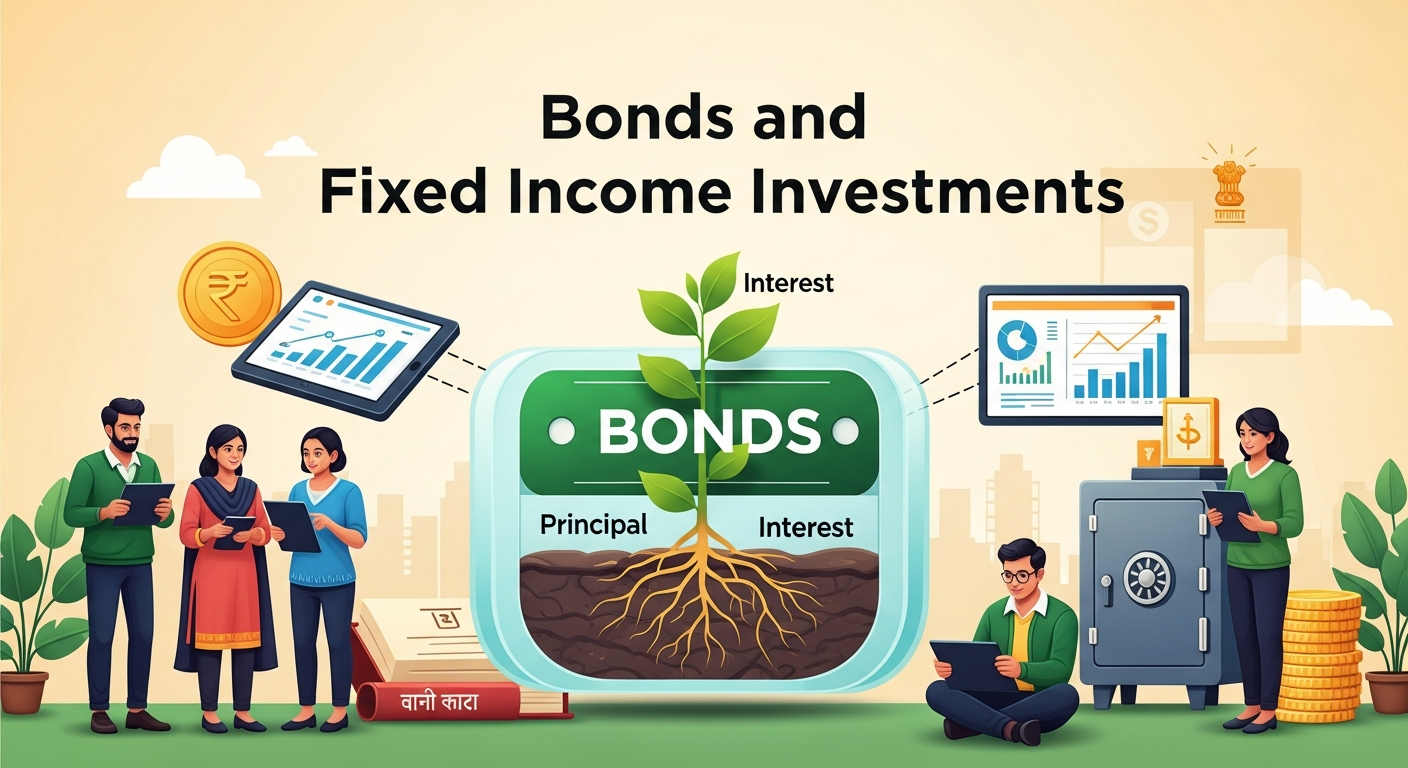
Bonds are fixed income financial instruments issued to investors by the Government or corporate authorities when they borrow money from people in the market.
The issuer agrees to pay a certain amount to the person lending money to them at regular intervals like quarterly or annually and repays the full principal amount on maturity.
Key Elements here:
Issuer – Bonds can be issued by the Government, corporate entities, and some municipal bonds are issued by states or cities.
Purchaser – The one who is lending money to the Government and agrees to get a fixed return on that money at regular intervals is the purchaser. He gets a bond certificate as a security that he will receive his complete principal amount on maturity and the interest portion at pre-decided intervals.
Face Value – Also known as the principal amount, it’s the amount that the purchaser has invested and which will be returned to him on maturity.
Coupon Rate – This is the interest rate that the issuer agrees to pay. The purchaser has the choice to either go for fixed-rate bonds or floating-rate bonds and, in case they opt for floating-rate bonds, the coupon rate may vary from time to time.
Maturity Date – The date when the issuer agrees to repay the principal amount. It could be after 5 years, 10 years, or even longer than that.
Credit Ratings – Credit agencies like CRISIL, ICRA, CARE, etc. assign ratings to bonds and these ratings decide the creditworthiness of the issuer and whether they will be able to repay the principal amount.
If you are going to purchase a bond, you can refer to these ratings to decide which available option you can opt for.
Issuing Bonds – Needs & Necessity

Government Bonds
When the Government needs money for multiple projects running in the country, it borrows money from the public and issues bonds to them. These bonds are also called sovereign bonds and since these bonds are backed by the Government, they are very safe to invest in.
Corporate Bonds
Apart from this, when companies need to raise funds for their daily operations, they issue corporate bonds with a slightly higher rate of interest. But then again, the risk is also on the higher side as there are chances that a company may go down.
If you select a listed bond, you can also sell it before the maturity date.
Advantages of Bonds

When I heard about bonds for the first time, I was like, why should I go for bonds when I can get better returns in the share market? But when I went deeper into this, it created a completely different picture in my mind.
It’s a much better option to protect your wealth while giving you fixed returns. Although both options serve different purposes, someone who is not willing to take market risks can surely go for it.
What is in it for a beginner?
Regular Income
When you invest a lump sum amount in bonds, you will start getting regular interest as per the interval of your choice, i.e., quarterly, half-yearly, or annually.
There are a few other options where you receive the complete amount along with the principal on maturity, and you can opt for that as per your requirement.
Capital Protection
The amount you have invested will usually be returned to you on maturity, but that is not always the case when you invest in stocks.
Stability
When you invest in Bonds, your returns are generally not affected by the ups and downs of the market. Rather, they help keep your capital and returns relatively safe.
How to buy Bonds?
Bonds cannot always be bought or traded on an exchange like stocks and MFs. In many cases, you need to connect with a broker.
But if you feel you are confident enough to make your own decisions about which bonds to invest in, RBI has its own platform where you do not need any broker in between to purchase bonds.
Major Takeaway
Bonds can help you diversify your portfolio so that you can make smarter decisions with your money. Many people invest in both Stocks as well as Bonds, as stocks help in building wealth over time and Bonds help in protecting wealth.
You can go and explore the world of Government Bonds - low risk, regular income, and the first step towards fixed income investing.