Stock Market - Wealth Creator or Wealth Destroyer?

Stock Market: Wealth Creator or Wealth Destroyer?

The stock market is a powerful word that has the potential to transform lives for some and, at the same time, create financial losses for others.
For many people, the first myth associated with the stock market is that it is a gamble. Others believe it is a complex field meant only for experts. But the reality is different. The stock market is not gambling, it is a structured, regulated financial system.
Anyone who studies the market carefully, understands risk management, and invests wisely can participate and potentially build long-term wealth.
In simple terms, the stock market is a marketplace where people buy and sell ownership in companies.
The stock market doesn’t reward luck, it rewards knowledge, patience, and discipline.
Understanding Buying and Selling of Shares
Whenever a publicly listed company wants to raise funds, it offers shares to the public. The first time a company offers its shares is through an IPO (Initial Public Offering).
An IPO is the process where a company sells its shares to the public for the first time to raise capital for:
- Business expansion
- Debt repayment
- Improving operations
- Launching new products
Once the IPO process is completed, the company’s shares are listed on stock exchanges and can be freely traded by investors.
In India, shares are traded primarily on:
- Bombay Stock Exchange
- National Stock Exchange
After listing, investors can buy and sell shares based on market demand and supply.
How Do Investors Make Money in the Stock Market?
Investors can earn money in two primary ways:
1. Capital Appreciation
Capital appreciation occurs when you buy a stock at a lower price and sell it at a higher price. For example, if you purchase a stock at ₹10 and sell it at ₹12, your profit of ₹2 is called capital appreciation. This is one of the most common ways investors generate returns in equity investing.

2. Dividends
Many companies distribute a portion of their profits to shareholders in the form of dividends. Dividends provide a steady source of passive income while you continue holding the shares.
While prices create growth, dividends create stability.

Why Do Stock Prices Fluctuate?
Stock prices move based on the fundamental principle of demand and supply.
- If more people are buying a stock, the price rises.
- If more people are selling, the price falls.
However, several key factors influence stock price movements:
- Company performance and earnings
- Economic conditions
- Government policies
- Industry growth
- Global market trends
- Investor sentiment
If a company reports strong financial results or announces expansion plans, its share price may increase. Conversely, poor performance or negative news can lead to price declines.
Stock market volatility is normal. Short-term fluctuations are part of long-term growth.
Participants in the Stock Market
Understanding the key players helps in understanding market movements.
Investors
Investors focus on long-term wealth creation. They buy fundamentally strong stocks and hold them for years, allowing compounding to work in their favor.
Traders
Traders aim to earn short-term profits by frequently buying and selling shares based on price movements and technical analysis.
Institutional Investors
These include mutual fund companies, banks, insurance companies, and foreign investors. They invest large amounts of money, and their buying or selling decisions can significantly influence market trends.
Market Patterns: Bullish vs Bearish Trends
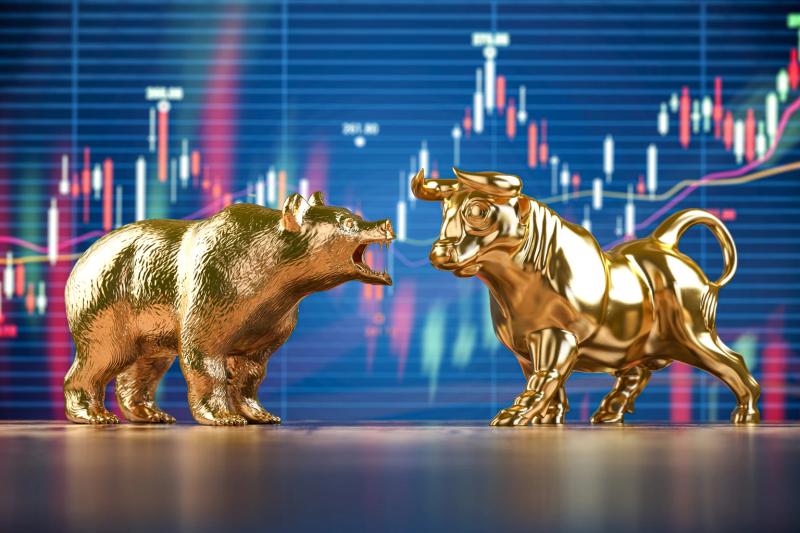
The stock market moves in cycles, it does not rise forever, nor does it fall forever.
Bullish Market
A bullish market (bull market) refers to a phase where stock prices are rising or are expected to rise.
During a bullish phase:
- Economic conditions are strong
- Companies report growing profits
- Investor confidence is high
- Buying activity increases
The term “bull” comes from the way a bull attacks, it thrusts its horns upward. Similarly, stock prices move upward in a bull market.
Investors feel optimistic and expect higher future returns.
A bull market rewards confidence, but discipline still matters.
Bearish Market
A bearish market (bear market) refers to a period when stock prices continuously decline or are expected to fall.
During this phase:
- Market sentiment turns negative
- Fear and uncertainty increase
- Investors start selling to avoid losses
- Prices decline further due to selling pressure
The term “bear” represents the way a bear attacks, swiping its paws downward, just like falling stock prices.
Although bear markets can be stressful, they are a natural part of the market cycle. Historically, markets have always recovered over time.
Long-term investors often view bear markets as opportunities to buy quality stocks at lower prices.
Smart investors don’t fear bear markets, they prepare for them.
Conclusion: Is the Stock Market a Gamble?
The stock market is not gambling. It is a regulated financial ecosystem that requires research, patience, and strategic decision-making.
Yes, there are risks. But with proper knowledge, long-term vision, and emotional control, the stock market has historically delivered strong returns.
If you are new:
- Start small
- Keep learning
- Research before investing
- Avoid emotional decisions
- Think long term
Always remember:
The stock market is not about getting rich overnight. It is about building wealth steadily over time.